
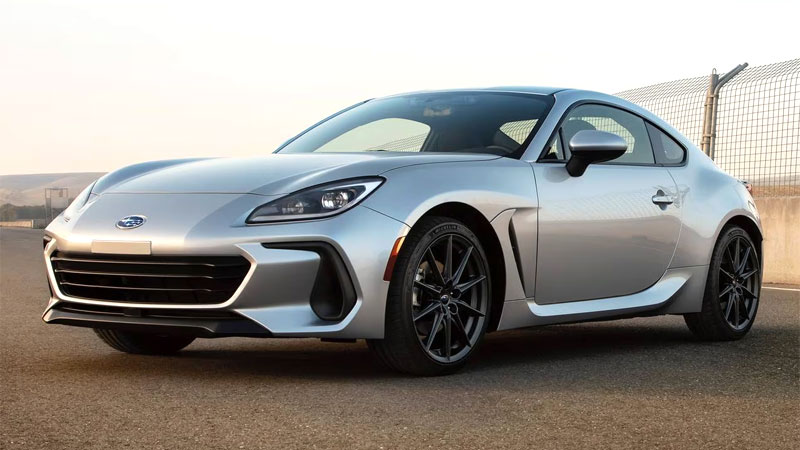
Driving your zippy Subaru BRZ down curvy roads loses its edge in the rain when your wiper blades are merely smearing the water on your windshield and have you guesstimating turns. Stop squinting through streaks by installing a fresh set of blades.
But which ones to get? Use the sizing chart below to get the correct size wiper blades no matter what year of BRZ you have. We’ll also let you know the brand of wipers most often recommended by Subaru enthusiasts.

Subaru BRZ Wiper Blade Size Chart
| Year | Style | Driver | Passenger | Recommended |
|---|---|---|---|---|
| 2024 | Coupe | 22" | 20" | Bosch ICON |
| 2023 | Coupe | 22" | 20" | Bosch ICON |
| 2022 | Coupe | 22" | 20" | Bosch ICON |
| 2020 | Coupe | 22" | 20" | Bosch ICON |
| 2019 | Coupe | 22" | 20" | Bosch ICON |
| 2018 | Coupe | 22" | 20" | Bosch ICON |
| 2017 | Coupe | 22" | 20" | Bosch ICON |
| 2016 | Coupe | 22" | 20" | Bosch ICON |
| 2015 | Coupe | 22" | 20" | Bosch ICON |
| 2014 | Coupe | 22" | 20" | Bosch ICON |
| 2013 | Coupe | 22" | 20" | Bosch ICON |
About the Subaru BRZ
The Subaru BRZ is a compact sports car that was first introduced in 2012 (as a 2013 model) as a result of a collaboration between Japanese automakers Subaru and Toyota.
Manufactured at Subaru’s Gunma assembly plant, the BRZ was developed alongside the Toyota 86, which is nearly identical to the BRZ. The partnership aimed to create an affordable, lightweight, and driver-focused vehicle that emphasized handling and driving pleasure over outright power.
The BRZ features a 2+2 seating configuration and is powered by a naturally aspirated Subaru Boxer engine. This engine layout is chosen for its low center of gravity, which contributes to the car’s nimble handling characteristics. The rear-wheel-drive configuration of the BRZ further complements its sporty nature, providing a balanced and engaging driving experience that has been praised by enthusiasts and the automotive press alike.
Throughout its production, the BRZ has been updated with various facelifts and performance improvements, while maintaining its position as one of the most accessible sports cars in the market. It has been celebrated for offering a pure driving experience reminiscent of classic sports cars, at a time when many vehicles have shifted towards heavier and more technology-laden designs.
When considering the purchase of a Subaru BRZ, potential buyers may have also looked at several competitors in the sports car segment. Notable alternatives include the Mazda MX-5 Miata, Ford Mustang, Scion FR-S, and Nissan 370Z.
See Also: Subaru WRX wiper blade sizes, Subaru Impresa wiper blade sizes