
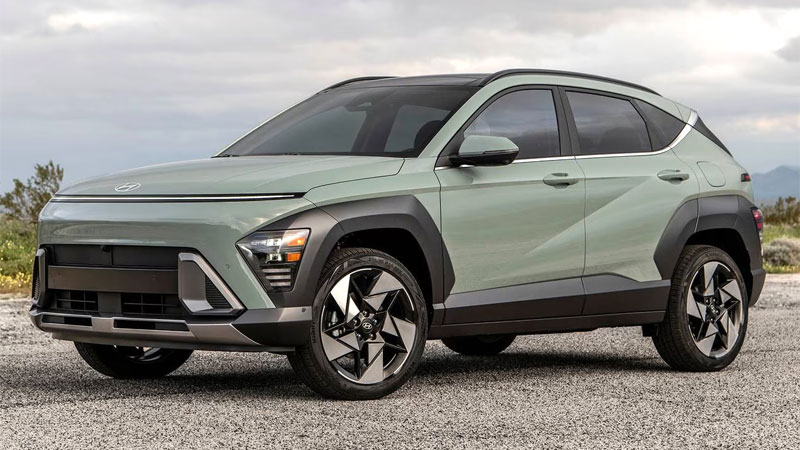
Small in stature but not lacking personality, your Hyundai Kona deserves capable wiper blades for navigating through the elements without the frustration of skipping and squeaking.
Use the size chart below to get accurate blade lengths for your particular year of Kona (whether the standard, N, or electric version) that seamlessly contour to your windshield. Not sure which brand of wiper blades to get? We’ll tell you what most auto enthusiasts use.

Hyundai Kona Wiper Blade Size Chart
Note: Sizes include the Kona, Kona N, and Kona Electric.
| Year | Style | Driver | Passenger | Rear | Recommended |
|---|---|---|---|---|---|
| 2024 | SUV | 26" | 16" | 11" | Bosch ICON |
| 2023 | SUV | 26" | 16" | 11" | Bosch ICON |
| 2022 | SUV | 26" | 16" | 11" | Bosch ICON |
| 2021 | SUV | 26" | 16" | 11" | Bosch ICON |
| 2020 | SUV | 26" | 16" | 11" | Bosch ICON |
| 2019 | SUV | 26" | 16" | 11" | Bosch ICON |
| 2018 | SUV | 26" | 16" | 11" | Bosch ICON |
About the Hyundai Kona
The Hyundai Kona is a subcompact crossover SUV that made its debut in June 2017 as a 2018 model. It represents Hyundai’s foray into the highly competitive subcompact SUV segment, appealing to a demographic seeking style, practicality, and urban maneuverability.
The Kona’s name is derived from the Kona district on the Big Island of Hawaii, reflecting the vehicle’s adventurous and fun persona.
Designed to cater to a broad audience, the Kona has been offered with a variety of powertrains, including traditional gasoline engines, a fully electric version, and a performance-oriented model.
The Kona Electric, which was introduced in 2018, marked Hyundai’s commitment to electrification, offering an eco-friendly alternative with competitive range and performance. With its electric powertrain, the Kona Electric has been well-received for its efficiency and fun driving experience, making it a strong contender in the growing EV market.
In addition to the electric variant, Hyundai has also developed the Kona N, a performance-focused version of the SUV. The Kona N is part of Hyundai’s N brand, which is dedicated to high-performance models.
It features a more powerful turbocharged engine, sport-tuned suspension, and distinctive styling cues that differentiate it from the standard Kona models. This model caters to drivers who seek a sportier driving experience in a compact SUV package.
The Hyundai Kona competes with other subcompact crossovers like the Honda HR-V, Mazda CX-30, Mazda CX-5, Kia Niro, and Nissan Kicks. These vehicles are often evaluated by consumers for their blend of size, efficiency, and versatility.
The Kona’s electric and performance variants add additional dimensions to its appeal, allowing it to stand out in a crowded market by meeting the needs of environmentally conscious consumers and those looking for a more dynamic driving experience.
See Also: Hyundai Santa Fe Wiper Sizes, Hyundai Tucson Wiper Sizes